The government is making it easier for people to invest their savings with the announcement of Personal Investment Accounts (PIAs) as part of Budget 2027. From July next year, people will be able to invest €12,000 each year.
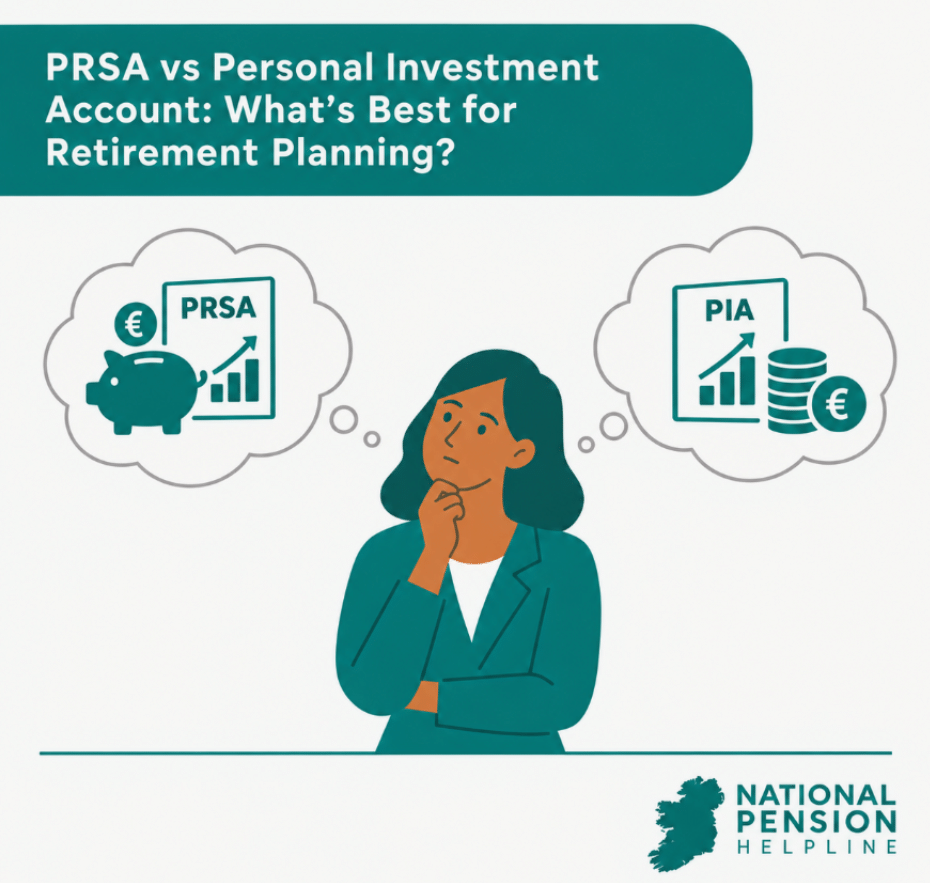
For those saving for retirement, this raises an important question: should you invest in a Personal Investment Account or use a Personal Retirement Savings Account (PRSA) – and can they complement each other?
What is the new Personal Investment Account?
From 1 July 2027, adults in Ireland will be able to invest up to €12,000 per year into an account which can hold investments such as ETFs, shares, bonds, and other eligible funds.
A flat 1% tax rate will be applied to the value of the account over €50,000, and there is no minimum holding or lock-in period.
PRSAs vs PIAs: Key differences
While PRSAs are aimed at those saving for retirement, offering tax relief on contributions, PIAs are aimed at those who wish to grow their money long term without locking their money away until they retire.
PRSAs don’t have a fixed annual maximum contribution limit like PIAs. Instead, income tax-relieved contribution limits are based on your age and are subject to a maximum earnings limit of €115,000.
PRSA
Personal Investment Account
What are the maximum PRSA contribution limits?
The percentage of your earnings eligible for tax relief through pension contributions is determined by your age bracket.
| Age | Contribution Limit with Tax Relief |
|---|---|
| Under 30 | 15% |
| 30 to 39 | 20% |
| 40 to 49 | 25% |
| 50 to 54 | 30% |
| 55 to 59 | 35% |
| 60 + | 40% |
This means that if you’re 55 years old and earning €75,000 per year, you could make pension contributions of up to 35% of your earnings and receive tax relief on those contributions. In other words, you could potentially receive income tax relief on pension contributions of up to €26,250.
Which one should you choose?
If you are saving specifically for retirement, a PRSA is likely to be the most tax-efficient option, allowing you to maximise your contributions as you near retirement.
A PIA may make sense for additional long-term investing if you wish to grow your money and retain the option of accessing it before you reach retirement age.
But you don’t have to choose between a PRSA and a PIA. For many people, the two may complement each other, rather than being an either-or choice.